Whitepaper Placement Mistakes That Kill B2B Lead Quality in 2026

Something’s happening in B2B marketing that a lot of companies are quietly ignoring whitepaper downloads are up, but pipeline quality is down.
You put serious time and budget into a well-researched whitepaper. The topic is solid, the design is polished, the insights are real. Then you launch it. Downloads pour in. The sales team gets excited. But when they follow up? Half the leads are students doing research, competitors scoping you out, or people who just wanted the free PDF and have no intention of buying anything. This is exactly why whitepaper leads go silent after download.
This isn’t a content problem. It’s a placement problem.
The most common reason B2B lead quality drops isn’t the whitepaper itself-it’s where it’s placed, who sees it, how it’s gated, and what happens after someone downloads it. These are fixable problems. Most companies just aren’t fixing them.
What “whitepaper placement” means
Placement isn’t just where your whitepaper lives online. It’s the full picture of how, where, and to whom your content is distributed.
It covers which channels you promote it on, which platforms or syndication networks you use, how you gate it, who you’re targeting with paid promotion, and what happens to a lead after they download. Get any of these wrong and you’re not generating leads-you’re generating noise.
Here are the nine most common whitepaper placement mistakes that quietly destroy lead quality-and how to fix each one.
The 9 mistakes killing your whitepaper lead quality
1.Placing it on every platform just to get volume
Why it hurts
When you syndicate your whitepaper to every available content platform-Scribd, SlideShare, generic industry portals-you get downloads from people who have nothing to do with your target buyer. A manufacturing operations director and a college student doing research are not the same lead, but they both count in your dashboard.
The fix
Be selective. Distribute only through platforms where your actual buyers spend time. A cybersecurity whitepaper belongs in front of IT decision-makers, not on general business portals. More reach is not always better reach.
2.No audience segmentation on paid promotion
Why it hurts
Running LinkedIn ads or display campaigns without proper audience filters is expensive and wasteful. If you’re not filtering by job title, company size, industry, and seniority level, you’re paying to show your content to everyone-including people who will never buy from you.
The fix
Build tight audience segments before you spend a single dollar on promotion. If your whitepaper targets CFOs at mid-size SaaS companies, define that explicitly. LinkedIn Campaign Manager lets you layer job function, seniority, and industry. Use every filter available.
3.Gating it with a single-field form
Why it hurts
Just asking for an email address gives you nothing useful. You’ll collect personal Gmail accounts, fake emails, and people who gave the bare minimum to access the file. The lead data is essentially worthless for sales qualification.
The fix
Ask for what matters: name, business email, company name, and job title at minimum. One qualifying question-“What’s your biggest challenge with [topic]?”-can pre-qualify intent and give your sales team a genuine conversation starter.
4.Posting it publicly with no gate at all
Why it hurts
Ungated whitepapers can support SEO and awareness, but they give you zero lead data. If your goal is demand generation, you need to capture something from people who show enough interest to download.
The fix
Use a hybrid approach: make the first few pages or an executive summary publicly accessible for SEO, then gate the full version. This naturally filters for people interested enough to share their details-and creates a quality signal before the lead even enters your system.
5.Promoting to a cold, unsegmented email list
Why it hurts
Blasting your whitepaper to an unsegmented list of 50,000 contacts is a classic volume-over-quality mistake. Open rates drop, spam complaints rise, and sales inherits a mountain of unqualified downloads to sift through manually.
The fix
Segment your email list before you send. Identify the subset of contacts whose job role, industry, and company profile match your whitepaper’s core audience. A targeted send of 2,000 to the right people almost always outperforms a generic blast to 20,000.
6.Ignoring intent signals in your targeting
Why it hurts
Demographic targeting is a good starting point, but it doesn’t tell you who is actively in-market right now. Someone who matches your ideal buyer profile but has no active intent is far less valuable than someone already researching solutions in your category.
The fix
Layer intent data into your placement strategy. Platforms like Bombora, G2, and 6sense show you which companies are actively researching topics related to your whitepaper. Serving content to in-market accounts dramatically improves the quality of every lead you capture.
7.No lead scoring or qualification after download
Why it hurts
Treating every whitepaper download as a sales-ready lead is one of the fastest ways to burn out your sales team and frustrate prospects who aren’t ready. Someone who downloaded your PDF late on a Friday evening is probably not ready for a discovery call Monday morning.
The fix
Set up lead scoring that accounts for company profile, job title, engagement history, and post-download behavior. Did they visit your pricing page? Open your follow-up emails? Only route leads to sales when they cross a meaningful threshold-not simply because they submitted a form.
8.Promoting a whitepaper that doesn’t match the buyer’s stage
Why it hurts
A deeply technical, solution-specific whitepaper served to an awareness-stage buyer will confuse them. A high-level industry overview pushed to a late-stage buyer will bore them. Mismatch between content depth and buyer stage destroys relevance-and relevance is what earns trust.
The fix
Map your whitepapers to funnel stages before setting up any distribution. Awareness content goes to cold audiences. Consideration content goes to retargeted or warm contacts. Decision-stage content-case studies, ROI analyses-goes to accounts already in active sales conversations.
9.No follow-up nurture sequence after download
Why it hurts
Most B2B buyers don’t convert after a single piece of content. If your whitepaper downloads triggers nothing beyond a sales rep calling the next day, you’re leaving significant pipeline value on the table-and likely annoying buyers who need more time.
The fix
Build a nurture sequence that responds to the download. A well-timed series of three to four emails over two weeks-each going one layer deeper on the topic-can move a passive downloader into a genuine sales conversation. Make the next step clear but never pushy.
10.No follow-up nurture sequence after download
Why it hurts
Most B2B buyers don’t convert after a single piece of content. If your whitepaper downloads triggers nothing beyond a sales rep calling the next day, you’re leaving significant pipeline value on the table-and likely annoying buyers who need more time.
The fix
Build a nurture sequence that responds to the download. A well-timed series of three to four emails over two weeks-each going one layer deeper on the topic-can move a passive downloader into a genuine sales conversation. Make the next step clear but never pushy.
How 24 Media Advert helps B2B teams improve whitepaper lead quality
If you’ve been running whitepaper campaigns and consistently receiving underwhelming leads, the issue is rarely the content-it’s the infrastructure around it.
24 Media Advert is a B2B demand generation agency headquartered in London, built specifically to connect content with the right audience. Their approach to whitepaper placement promotion services isn’t about maximising download volume. It’s about making sure every lead that comes through is someone who could realistically buy from you.
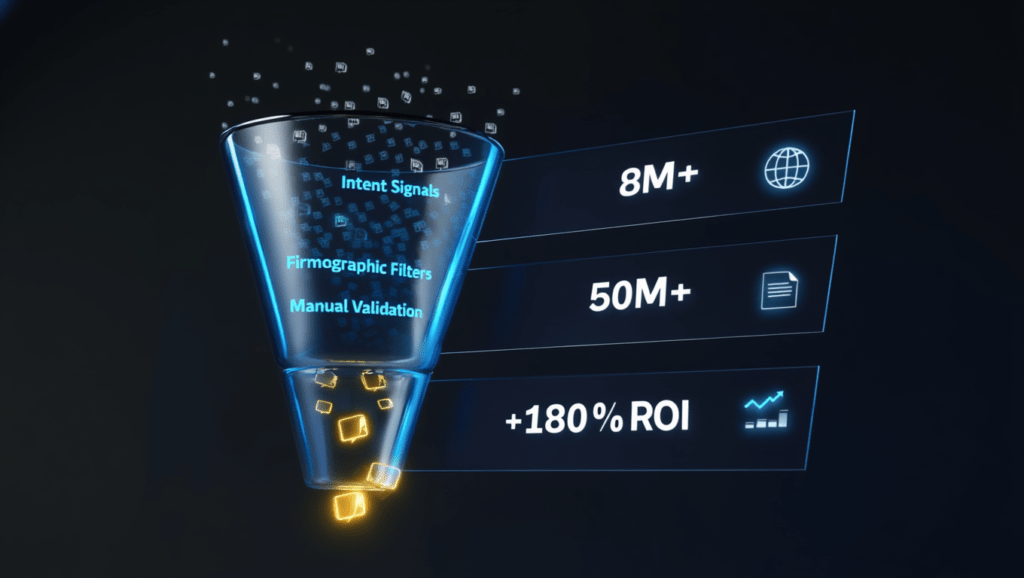
They combine intent signals, firmographic filters, and content engagement data to target decision-makers who are actively researching in your category. Leads are validated manually across their UK strategy team and India operations centre-not just passed through an algorithm and handed over.
8M+ Decision-maker subscribers across 50 countries
50M+ Whitepapers and eBook leads delivered
+180% Average ROI increase from targeted distribution
Their services cover the full placement ecosystem: whitepaper syndication across high-authority industry publications, targeted email to segmented decision-maker lists, account-based advertising, lead scoring, and SDR follow-up. You hand over your asset and your ICP; they handle everything else.
For B2B marketers tired of chasing phantom leads, it’s a straightforward improvement: fewer downloads, better conversations, cleaner pipeline.
Quick checklist: whitepaper placement done right
- Distribute only through platforms where your target buyers are active
- Segment paid audiences by job title, seniority, company size, and industry
- Gate the full whitepaper-capture name, business email, company, and title
- Use a hybrid gate: free summary publicly available, full version behind a form
- Promote to segmented email lists, not your entire database
- Layer intent data into targeting to reach in-market buyers
- Set lead scoring rules-don’t route every download straight to sales
- Match whitepaper depth and topic to the buyer’s funnel stage
- Build a 3–4 email nurture sequence triggered by every download
- Review lead quality monthly-not just volume
Conclusion
Most whitepaper campaigns don't fail because the content is bad. They fail because it reaches the wrong people, with the wrong gate, at the wrong stage, with nothing meaningful happening afterward.
The nine mistakes above are all common, all fixable, and all directly tied to why your pipeline doesn't reflect your download numbers. Fix the placement and you fix the lead quality.
If you're ready to rethink how your whitepapers reach the market-and who they actually reach-the team at 24 Media Advert can help you build a distribution strategy that prioritises quality over volume. Start with one whitepaper, one tightly defined audience, and the right infrastructure around it.
Talk to the team at 24 Media Advert →