What Is Targeted Email Marketing? A B2B Buyer’s Guide
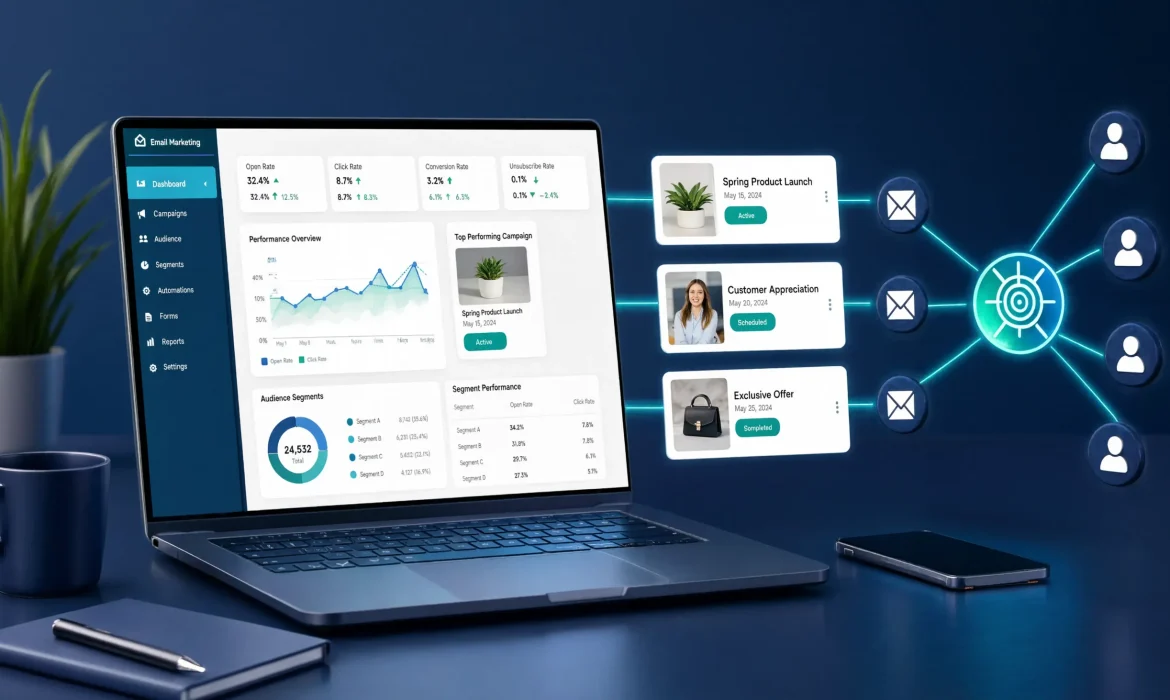
Targeted email marketing is a B2B outreach approach where campaigns are built around a specific ideal customer profile, rather than sent broadly to a purchased or generic list. Instead of blasting the same message to thousands of unqualified contacts, targeted email marketing narrows the audience by industry, company size, seniority, and technology stack, then matches messaging to where each segment sits in the buying journey.
The goal isn’t a bigger list. It’s a better-matched one, sent with the infrastructure and discipline to land in the inbox.
If you’ve run cold email before, you already know the problem this solves. Most B2B campaigns fail not because the offer is bad, but because the list is wrong and the sending setup is worse. Decision-makers ignore emails that don’t speak to their role. Spam filters catch the rest. Targeted email marketing addresses both problems at once – precision on the audience side, discipline on the delivery side.
How Is Targeted Email Marketing Different From ABM?
This is the question that trips people up most, so it’s worth being direct about it.
Account-based marketing (ABM) is built for depth. You pick a small list of named accounts, research each one, and craft outreach that’s personalized down to the individual buyer. It’s slow, resource-intensive, and effective when your total addressable market is small and every account is worth the effort.
Targeted email marketing is built for reach. You’re not writing one email per account – you’re building a large, well-qualified list based on shared characteristics (industry, seniority, tech stack) and running campaigns designed to generate volume of qualified conversations, not a handful of hand-picked ones.
Neither approach is “better.” They solve different problems. If your pipeline depends on getting in front of a large pool of similar buyers, targeted email marketing does that efficiently. If you’re selling into 20 named enterprise accounts where each deal is worth six figures, ABM’s depth is worth the extra effort. Some teams run both – ABM for the top-tier accounts, targeted email for everything below that threshold.
Who Targeted Email Marketing Actually Works For
Targeted email marketing fits teams that need scale, not just narrow precision. That means:
Demand generation teams trying to build pipeline across a broad buyer base, companies running multi-market or multi-industry campaigns, and organizations that need reach beyond what a small target-account list can provide.
It’s not the right fit for one-to-one sales outreach, hyper-personalized ABM campaigns, or teams expecting relevance alone to substitute for volume. If your strategy depends on handcrafted, individual messaging to a short list of accounts, targeted email marketing isn’t built for that job – and forcing it into that role usually disappoints.
The honest way to think about it: targeted email marketing is a distribution strategy. It gets your message in front of more of the right people, more consistently, than most teams can do manually.
Why Most Targeted Email Campaigns Still Fail
Even with a well-defined ICP, most B2B email campaigns underperform for one of two reasons.
The first is list quality. A targeted list that’s built from stale data, guessed contacts, or unverified sources isn’t targeted – it just looks targeted on paper. Bounce rates climb, sender reputation drops, and the campaign never gets a fair shot at the inbox.
The second is infrastructure. This is the part most teams underestimate. Sending high volumes of email through shared or third-party blast tools puts your domain reputation at risk, especially if other users on that same platform are sending spammy campaigns. Deliverability isn’t just about who you’re emailing – it’s about how the email gets sent. Warmed domains throttled sending volumes, and proper authentication (SPF, DKIM, DMARC) all affect whether your message reaches the inbox or the spam folder before anyone even reads the subject line.
Get either of these wrong, and the targeting doesn’t matter.
What Good Targeted Email Marketing Looks Like in Practice
A properly run campaign moves through three stages.
First, audience definition. This is where boundaries get set – which industries, regions, and role categories to target, and what volume thresholds make sense based on domain health and campaign goals. Reach without guardrails is how campaigns end up damaging sender reputation instead of building pipeline.
Second, deployment. Campaigns should run through infrastructure built for scale – calibrated sending domains, throttled volumes, and consistent (not spiky) send schedules. This is usually the difference between an agency using its own sending infrastructure and one relying on third-party blast tools that can’t control who else is sending from the same shared domains.
Third, monitoring. Good campaigns track more than opens and clicks. Delivery and inbox placement data, bounce and suppression insights, and engagement signals all feed back into sharper targeting and cleaner lists over time. Reach generates awareness – the signals tell you what to actually do next.
Frequently Asked Questions
What does a targeted email marketing agency do?
A targeted email marketing agency handles the full campaign lifecycle: building a verified list based on your ICP, writing and sequencing the email copy, deploying campaigns through infrastructure designed to protect deliverability, and reporting on performance in a way that flags qualified replies for your sales team – not just opens and clicks.
Is targeted email marketing the same as cold email?
Not quite. Cold email is a delivery method – sending unsolicited messages to prospects you haven’t previously engaged. Targeted email marketing is a strategy that determines who receives those emails and why. You can run cold email badly (untargeted, unverified lists) or well (built around a defined ICP with proper infrastructure) – the targeting is what separates the two outcomes.
What reply rates are realistic for targeted email marketing?
Well-targeted B2B campaigns typically see reply rates of 2–5% from senior decision-makers, which is meaningfully higher than untargeted broadcast email. Results shift based on industry, offer, and list quality, but campaigns aimed at CXOs and VPs in complex B2B categories tend to consistently outperform volume-first approaches.